 BudgeTrak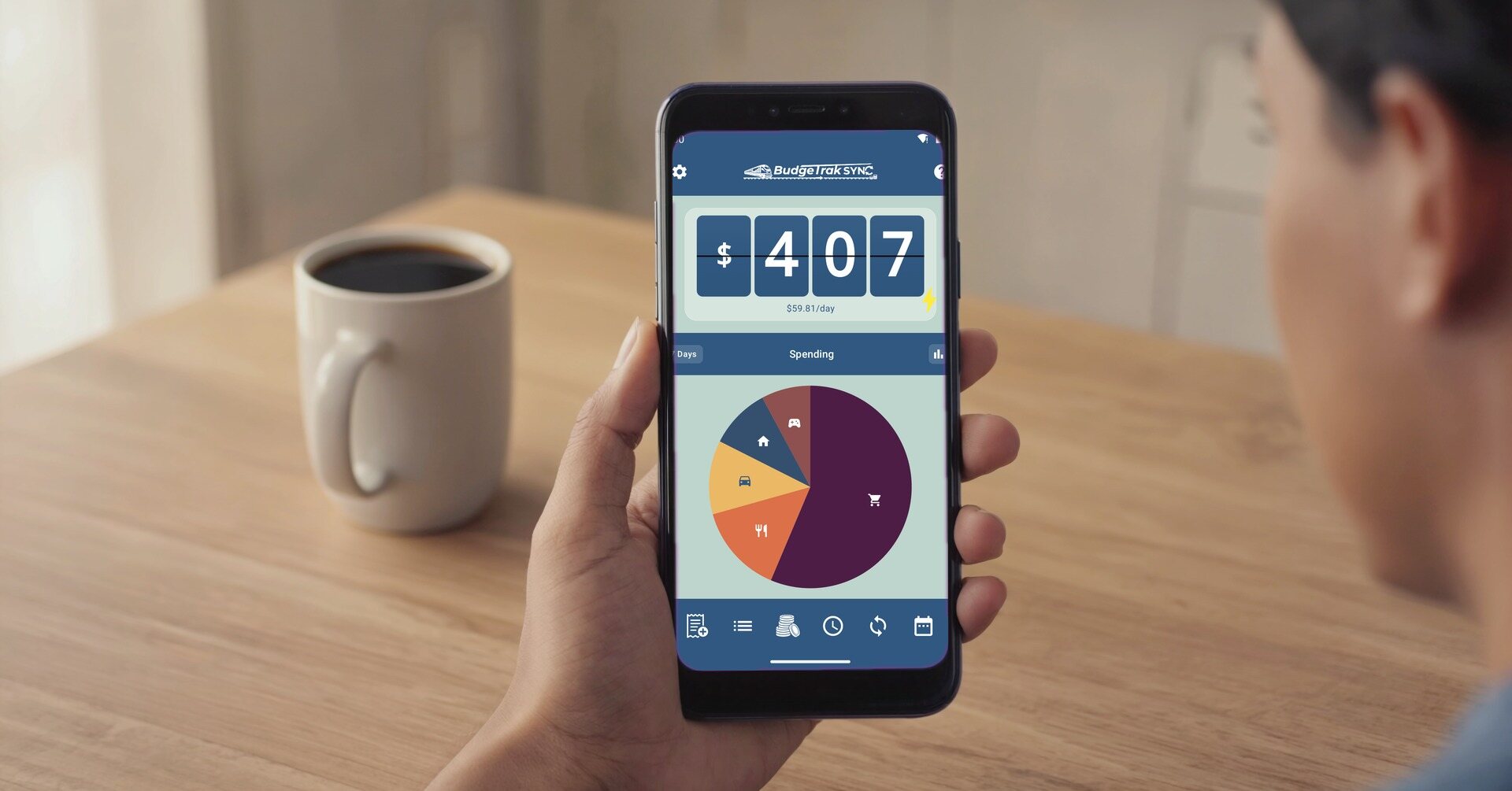
Open your banking app. Whatever number you see is not your spending money, and acting as though it is causes most household budget failures.
The balance includes your rent. It includes the insurance premium that renews in eleven days, the annual domain bill you have forgotten about since last March, and the money you told yourself was going toward a holiday. All of it is sitting in the same account, indistinguishable from money you can actually spend on lunch.
“Safe to spend” is the attempt to produce a different number: what you can spend today without breaking a commitment you have already made.
Here is how BudgeTrak arrives at it. This is genuinely the whole method — there’s no hidden scoring.
Layer 1: Base Budget — income minus the sinking funds
Start with income per period. If you’re budgeting daily, that’s your annual income divided by 365.25. The engine keeps income theoretical-annual on purpose: it stops your budget from lurching every time a year happens to contain 27 fortnightly paydays instead of 26.
Then every recurring bill gets turned into a sinking fund.
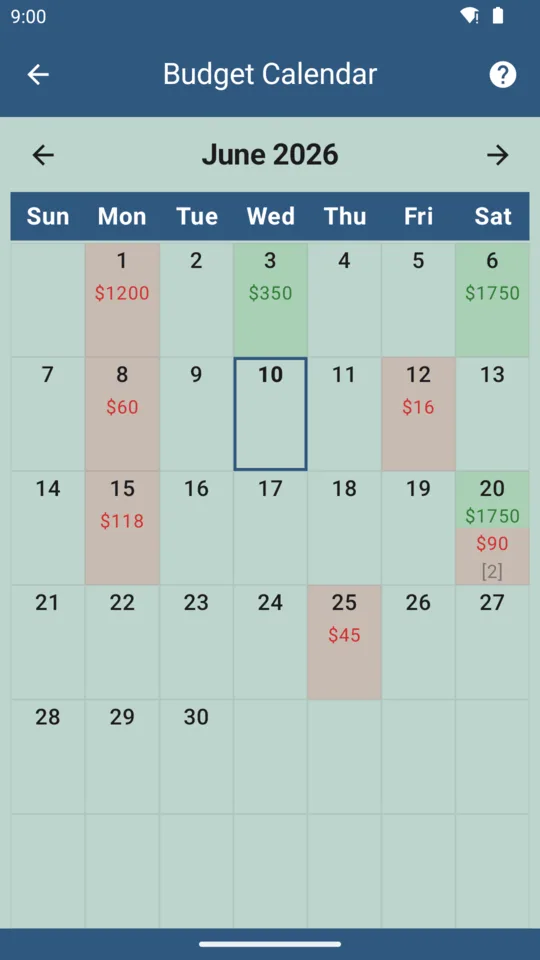
This is the part most budgeting apps skip, and it’s the part that matters. Rather than letting a $1,200 insurance premium sit invisible for eleven months and then detonate, the engine reserves a slice of it every single day:
daily reservation = bill amount ÷ actual days in its cycle
The cycle length is the real calendar interval, not an average — February is 28 days, so a monthly bill reserves slightly more per day in February than in March. Small detail, but it’s the difference between a number that drifts and one that doesn’t.
Sum that across every bill, multiply by the days in your budget period, and subtract:
Base Budget = income per period − Σ (daily reservation × days in period)
Base Budget is not yet your safe number. It’s income minus bills — a useful figure, and the one many apps stop at and mislabel as spendable.
A note on future-dated bills. A bill you add today that isn't due for three months does not immediately deduct its full run rate — the reservation ramps from its creation date toward its first due date. Otherwise adding a bill would crater your daily number overnight for a payment you have months to prepare for.
Layer 2: Safe Budget Amount — the number you actually spend
Three more things come out:
Safe Budget = max(0, Base Budget − amortisation − savings goals − accelerated catch-up)
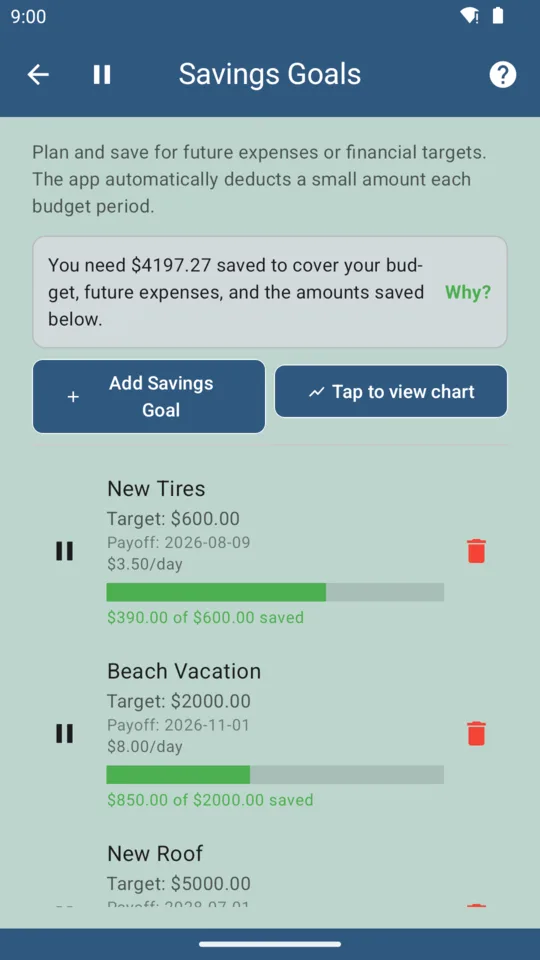
- Savings goals. Money you’ve told the app you’re setting aside for something specific. It’s committed, so it isn’t spendable.
- Amortisation. The reverse of a savings goal: an expense that already happened and is being spread over coming months. The car repair you paid for last week doesn’t have to ruin this entire month; it can cost you a bit per day for six months instead.
- Accelerated catch-up. If you’re behind on a bill’s sinking fund — you added it late, or a period got skipped — the engine catches up rather than quietly arriving at the due date short.
The result is the figure on the dashboard, and the design goal is specific: it should be safe to spend it to zero every day. Not “safe if you’re careful.” Safe because everything that could ambush you was already subtracted.
Balance versus rate — the distinction worth learning
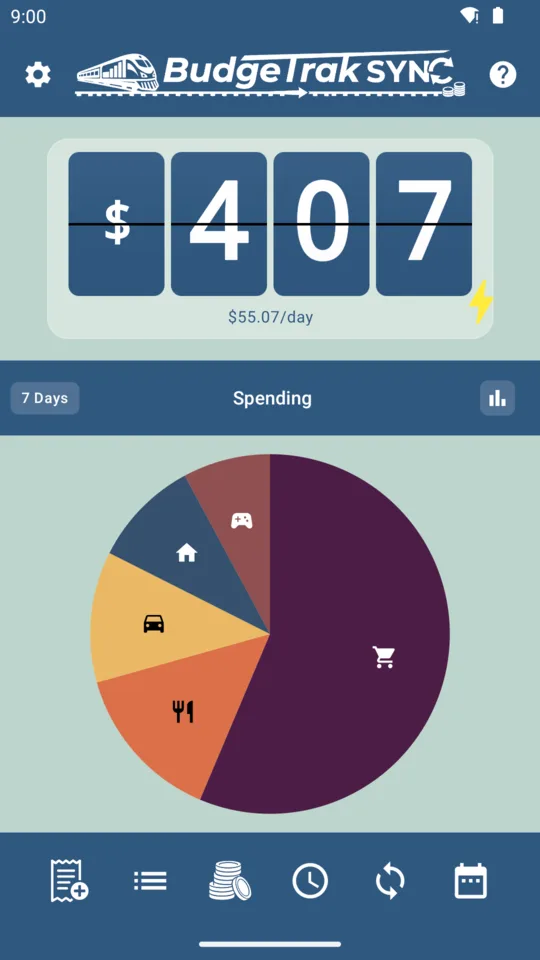
Two numbers, and confusing them is the most common way people misread a budget:
| What it is | What it answers | |
|---|---|---|
| Available Cash | A balance — period credits plus everything you’ve spent | “How much is actually left?” |
| Safe Budget | A rate — per day, week or month | “How much can I spend today?” |
Only the rate should ever be treated as spending money. Available cash looks larger and more encouraging, and it is the number that gets households into trouble, because a balance says nothing about what is about to leave it.
Why your number will look wrong at first
Almost everyone’s reaction on day one is that the figure is too low.
It’s usually correct, and the gap is diagnostic. The distance between your bank balance and your safe daily number is precisely the total of the commitments you had been carrying invisibly. Seeing it stated is uncomfortable in the same way a first honest weigh-in is uncomfortable.
Two things genuinely do make it read low, and both are worth checking:
- Missing income. Irregular or secondary income that hasn’t been entered. The engine handles variable pay, but only for income it knows about.
- Double-counted bills. A bill entered as recurring and also being logged manually each month gets reserved twice.
If neither applies, the number is telling you something true.
Everything updates from one source
Because the calculation is deterministic, every device with the same data computes the same result independently — which is what makes shared budgets work without one phone being the “authority.” Log an expense on any device and both the balance and the rate move on all of them, in real time, with no reconciliation step.
The short version
Your bank balance answers a question you didn’t ask. A safe-to-spend figure answers the one you did: can I buy this?
The arithmetic is not clever, and that’s rather the point — it’s just the discipline of subtracting every future commitment a little at a time, every day, instead of pretending it won’t arrive.
Frequently asked questions
What does 'safe to spend' mean?
It is the amount you can spend today without breaking a financial commitment you have already made. Unlike a bank balance, it has already had a daily share of every upcoming bill, savings goal, and amortised expense subtracted from it — so spending it to zero is survivable by design.
How is safe to spend calculated?
BudgeTrak computes it in two layers. Base Budget is your income per period minus a day-prorated sinking-fund reservation for every recurring bill. Safe Budget Amount then subtracts savings-goal contributions, amortised one-off expenses, and any accelerated bill catch-up. The result is the figure the dashboard shows.
Why is my safe-to-spend number so much lower than my bank balance?
Because your bank balance includes money that is already spoken for. The gap between the two numbers is exactly the total of your upcoming commitments — rent, insurance, subscriptions, savings. That gap is not the app being pessimistic; it is the money you were previously at risk of spending twice.
What is the difference between available cash and safe budget?
Available cash is a balance — what is actually left right now. Safe Budget is a rate — what you can spend per day. The large figure on the dashboard is the balance; the smaller figure beneath it is the rate.
What happens if I spend more than the safe amount?
Nothing breaks. The next day’s figure absorbs it and comes back lower, because the same commitments still have to be met from less money. The number self-corrects rather than scolding you.
See your own number
The budget engine is free forever — no account, no trial clock.
Get it on Google Play